
Carb Timing for HIIT: Pre-Workout Strategies
Carb Timing for HIIT: Pre-Workout Strategies
When it comes to high-intensity interval training (HIIT), timing your carbohydrate intake can drastically impact your performance. Carbs fuel your muscles by replenishing glycogen stores, which are essential for sustaining energy during intense, short bursts of activity. Without enough glycogen, fatigue sets in quickly, reducing your ability to perform at your best.
Here’s what you need to know:
- 60–120 minutes before HIIT: Eat a carb-rich meal with some protein. Examples include oatmeal with banana or Greek yogurt with berries. Aim for 1–4 grams of carbs per kilogram of body weight.
- 15–30 minutes before HIIT: If you're short on time, opt for quick-digesting carbs like white bread with jam, a banana, or a spoonful of honey. These provide fast energy without causing digestive discomfort.
- Carb amounts: For sessions under an hour, 20–30 grams of carbs may suffice. Longer or more intense workouts may require 30–60 grams or more.
- Hydration matters: Pair carbs with proper hydration and electrolytes to optimize energy delivery to your muscles.
- Add protein: Including moderate protein in your pre-workout meal supports recovery and reduces muscle breakdown.
The right carb timing can help you maintain energy, delay fatigue, and improve focus during HIIT. Experiment with different foods and timing to find what works best for your body.
How Carbohydrates Fuel HIIT Workouts
Carbohydrates play a central role in powering your body during high-intensity interval training (HIIT). When you consume carbs, your body breaks them down into glucose, a crucial fuel for muscle contractions during exercise. Glucose is stored as glycogen in your muscles and liver, providing the energy needed for those explosive, high-intensity movements.
HIIT workouts, which push your heart rate to 80% to 100% of its maximum, demand quick bursts of energy. To meet these demands, your body relies on the glycolytic energy system, which uses glycogen and plasma glucose to rapidly produce ATP - the energy currency your muscles need. Carbohydrates are the preferred fuel source here because they generate energy much faster than fat. For example, in just a 6-second sprint, muscle glycogen accounts for about 50% of the total ATP turnover in the muscle. As exercise intensity climbs above 60% VO2max, your body shifts to depend more heavily on carbohydrates, while fat's contribution decreases. This is why timing your carb intake before a HIIT session is so important.
"Muscle glycogen provides a rapidly available substrate for energy production when completing high intensity efforts during intermittent activity." - Nutrients Journal
Running low on glycogen can spell trouble for your performance. When muscle glycogen levels drop below approximately 200 mmol/kg dry weight, the glycolytic rate - how quickly your body breaks down sugar for energy - slows down. This is especially problematic for Type II (fast-twitch) muscle fibers, which are the powerhouse behind your explosive movements and rely heavily on glycogen. Studies simulating 90-minute high-intensity sessions show that nearly 80% of muscle fibers can become depleted or nearly depleted of glycogen. This explains why consuming carbs before HIIT is key to maintaining your power and performance throughout the workout. Without adequate glycogen stores, your ability to sustain high-intensity efforts diminishes quickly.
sbb-itb-7567710
The 60–120 Minute Pre-Workout Carb Window
Eating a meal 60–120 minutes before working out helps your body digest nutrients and prepare for exercise. This timing ensures your glycogen stores are replenished, providing the energy you’ll need for intense activity. It also stabilizes blood sugar levels, which can improve focus and alertness. Including protein in this meal can help reduce the cortisol response from exercise. For example, a 150-pound athlete might aim for about 68 grams of carbohydrates roughly an hour before training to maximize performance. This approach not only fuels your workout but also helps you make smarter food choices.
What to Eat 60–120 Minutes Before HIIT
For high-intensity interval training (HIIT), focus on meals that combine easily digestible carbs with moderate amounts of lean protein. Keep fats and fiber low to avoid digestive discomfort. A good rule of thumb is a 2:1 ratio of carbs to protein, which supports both energy and recovery.
Here are some meal ideas:
- Oatmeal topped with banana
- Greek yogurt with berries and granola
- Chicken breast with half a cup of cooked brown rice
If you prefer something lighter, try:
- Whole-wheat toast with peanut butter and sliced banana
- A small turkey sandwich on white or whole-grain bread
Avoid heavy, fatty foods like fried items or cream-based dishes, as well as high-fiber foods such as beans or broccoli, which can slow digestion and lead to cramping.
Why This Timing Works
Timing is everything when it comes to pre-workout nutrition. Eating within the 60–120 minute window gives your body enough time to digest food before blood flow shifts to your muscles during exercise. This helps you avoid common issues like nausea or stomach pain. Carbohydrates are especially important because they’re the primary fuel for around 90% of the body’s energy systems. Eating the right amount of carbs during this window ensures you’ll have the energy to maintain peak performance throughout your workout. Stick to smaller portions to avoid overloading your digestive system, which could slow you down.
The 15–30 Minute Quick-Fuel Strategy
When you're short on time before a high-intensity interval training (HIIT) session, quick-digesting carbs can be a lifesaver. While a full meal 60–120 minutes before exercise is ideal, this isn't always practical. Whether you're squeezing in a workout during a busy day or hitting the gym early in the morning, simple carbs provide fast energy without weighing you down. These carbohydrates break down quickly into glucose, fueling your muscles almost immediately.
The science backs this up. One study found that participants who consumed a carbohydrate drink 30 minutes before high-intensity exercise lasted 9.0 ± 1.9 minutes, compared to 7.9 ± 1.9 minutes when the drink was consumed 120 minutes prior. During intense exercise, blood flow shifts away from the digestive system to focus on your working muscles.
To avoid discomfort and maximize energy, choose foods low in fiber, fat, and protein. These ensure rapid digestion and conversion into glucose.
Best Quick-Digesting Carb Sources
For quick energy, stick to simple carbs with minimal fiber. Here are some proven options:
- White bread with jam: Delivers fast-acting carbs without causing bloating.
- Bananas: Provide natural sugars along with potassium to help prevent cramping.
- Pretzels: Offer quick glucose and sodium to replenish electrolytes.
If you're down to the wire with just 5–10 minutes before your workout, consider liquid or semi-liquid options. Kirbie Daily, RDN at University of Memphis Athletics, recommends:
"If a workout is starting in five to 10 minutes and you're in a pinch, I like to recommend a spoonful of honey. It will be absorbed super quick to provide energy without making you feel weighed down".
Other great choices include applesauce, diluted fruit juice, or sports drinks. These options digest even faster than solid foods, making them ideal when you're racing the clock. Aim for 30 to 60 grams of carbohydrates in this window to maintain your blood glucose levels and delay fatigue.
When to Use Quick Carbs
Quick carbs are especially helpful for early-morning workouts when you don’t have time for a full meal. They’re also a great option when your energy starts to dip several hours after eating, acting as a quick "top-off" for your glycogen stores. This strategy is particularly effective for high-intensity sessions like HIIT, where your body needs immediate glucose rather than slow-burning fuel.
To avoid digestive discomfort, skip heavier foods like whole-wheat bread, oatmeal, or snacks with nuts and seeds.
Refined grains and simple sugars are your best bet for instant energy.
How Many Carbs You Need Before HIIT
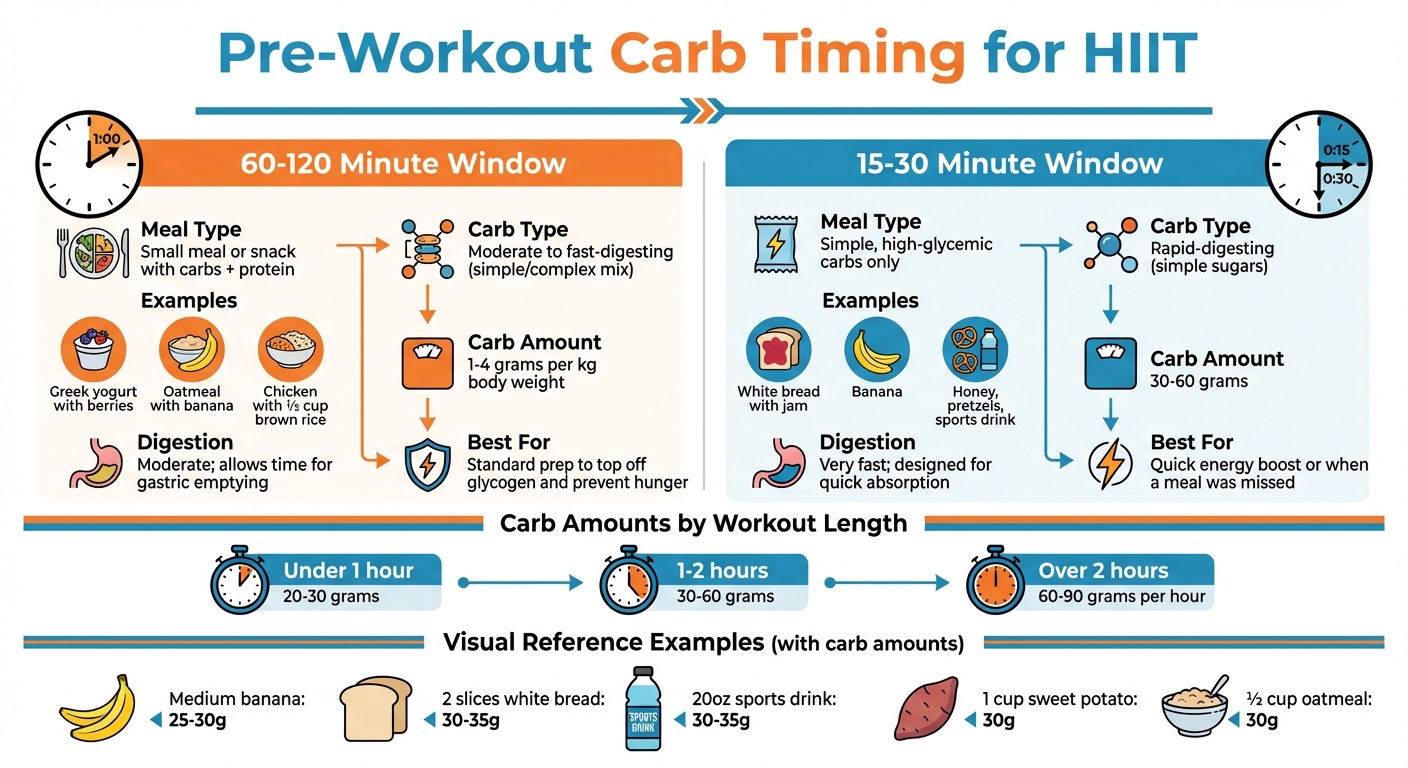
Pre-Workout Carb Timing Guide for HIIT: 60-120 Minute vs 15-30 Minute Windows
Getting the right amount of carbs before a HIIT session can make all the difference in maintaining your energy and performance. But how much do you actually need? It largely depends on how long and intense your workout is.
For workouts under an hour, 20–30 grams of carbohydrates are typically enough if your glycogen stores are already in good shape. This small boost provides the energy you need without overloading your stomach.
If your HIIT session lasts 1–2 hours, you'll want to up that to 30–60 grams of carbs. This keeps your blood sugar steady and helps you avoid hitting a wall halfway through. On the rare occasion you're tackling a HIIT session that exceeds two hours, you might need 60–90 grams per hour, but only if your digestive system can handle it.
Interestingly, your gut - not your body size - sets the limit for how much carbohydrate you can absorb. Most athletes max out at 60 grams per hour, but using a mix of glucose and fructose can bump that up to 90 grams per hour by tapping into different absorption pathways.
Carb Amounts Based on Workout Length
To keep your energy levels steady, you can also calculate your carb needs based on your body weight. If you're eating 1–4 hours before exercise, aim for 1–4 grams of carbs per kilogram of body weight (g/kg BW). For example, someone weighing 154 pounds (70 kg) would need between 70 and 280 grams. This becomes even more important in the morning after an overnight fast, as your liver glycogen stores may have dropped by about 50%.
Here are some common pre-workout food options to help you hit those numbers:
- A medium banana: 25–30 grams
- Two slices of white bread: 30–35 grams
- A 20-ounce sports drink: 30–35 grams
- One cup of sweet potato: 30 grams
- Half a cup of oatmeal: 30 grams
Choose foods that match your timing and workout length for the best results.
Carb Timing Comparison Table
To make it easier to decide what and when to eat, here’s a quick comparison of the two main pre-workout windows:
| Feature | 60–120 Minute Window | 15–30 Minute Window |
|---|---|---|
| Meal Composition | Small meal or snack with carbs and protein (e.g., Greek yogurt with berries) | Simple, high-glycemic carbs (e.g., jellybeans, sports drink) |
| Carb Type | Moderate to fast-digesting (simple/complex mix) | Rapid-digesting (simple sugars) |
| Digestion Time | Moderate; allows time for gastric emptying | Very fast; designed for quick absorption |
| Best Use Case | Standard prep to top off glycogen and prevent hunger | Quick energy boost or when a meal was missed |
If you're planning to consume more than 60 grams of carbs per hour, you'll need to train your gut to handle it. Gradually increase your intake over 4–6 weeks to reduce the risk of digestive issues. Also, don’t forget to hydrate properly - start drinking fluids slowly at least four hours before your workout.
Additional Strategies to Support Your Carb Timing
Carb timing is just one piece of the puzzle - hydration, protein, and caffeine can also play a big role in improving both performance and recovery.
Hydration and Electrolytes
Staying hydrated is crucial because your body relies on fluids to transport carbohydrates and oxygen to your muscles. When you start exercising, blood flow shifts away from digestion and focuses on delivering nutrients to your working muscles. Without enough hydration, even perfectly timed carbs can't do their job effectively.
Electrolytes like sodium and potassium are equally important. They help regulate muscle contractions and maintain fluid balance, especially during intense workouts. Dehydration can lead to fatigue and headaches, which undercut the energy-boosting effects of your pre-workout carbs.
Research suggests that consuming a 6.4% carbohydrate–electrolyte sports drink 30 minutes before high-intensity exercise can improve performance. For example, participants in one study lasted 9.0 ± 1.9 minutes compared to 7.9 ± 1.9 minutes when the drink was consumed 120 minutes earlier. To stay hydrated, aim to drink 2–3 cups (473–710 ml) of water in the 2–3 hours before your workout. During exercise, sip 0.5–1 cup (118–237 ml) every 15–20 minutes, adjusting as needed. Afterward, rehydrate with 2–3 cups (473–710 ml) of water for every pound (0.5 kg) of weight lost.
Hydration is just the start - adding protein to your routine can further enhance recovery.
Adding Protein for Recovery
Protein works hand-in-hand with carbs to optimize recovery. Including protein in your pre-workout meal ensures that amino acids are circulating in your bloodstream by the time your session ends. This helps kickstart muscle repair and prevents muscle breakdown during high-intensity intervals.
A review of 30 randomized controlled trials found that combining carbs and protein significantly improved endurance and performance compared to carbs alone. The sweet spot is 20–40 grams of high-quality protein within two hours of exercise. If you're eating 2–3 hours before your workout, make sure your meal includes both complex carbs and a moderate amount of protein.
Once you've nailed hydration and protein, caffeine can add an extra edge to your performance.
Using Caffeine Before HIIT
Caffeine is a powerful tool for improving focus, reducing fatigue, and enhancing how your body uses carbs. Studies show that combining caffeine with glucose leads to better results than glucose alone. It also helps conserve glycogen stores by promoting fat burning early in your workout, which can boost endurance during tough intervals. For instance, elite athletes who supplemented with caffeine (3 mg/kg) improved their hill session times by about 2.4%.
To get the most out of caffeine, consume 3–6 mg per kilogram of body weight (roughly 200–400 mg for most people) about 30–60 minutes before training. This timing ensures your blood caffeine levels peak when you need them most. For reference, an 8-ounce cup of brewed coffee contains around 135 mg of caffeine, while a single espresso shot has about 107 mg.
"Take the caffeine that you may already consume in a day and organize its timing so that you optimize your performance benefits." - Dr. Louise Burke, Professorial Fellow, Australian Catholic University
Conclusion
Timing your carbohydrate intake can make a big difference in your HIIT performance. For sustained energy, aim to consume complex carbs like oatmeal or sweet potatoes 60–120 minutes before your workout. If you need quick energy, go for fast-digesting carbs like bananas or sports drinks 15–30 minutes prior. Typically, HIIT sessions call for 30–60 grams of carbs, though longer or more intense workouts might require more to maintain energy and prevent fatigue.
But it’s not just about carbs. Hydration, protein, and caffeine also play key roles in optimizing your performance. Staying hydrated helps your muscles effectively use carbohydrates, protein supports recovery and manages cortisol levels, and caffeine sharpens focus and enhances overall output. For example, studies show that drinking a 6.4% carbohydrate–electrolyte solution 30 minutes before exercise can significantly improve performance.
Finding the right pre-workout snack is a personal journey. Everyone’s body reacts differently to various foods and timing strategies. Use your training sessions as opportunities to test what works best for you. Adjust your snack choices and timing to discover the perfect combination for fueling your workouts.
"It is a good idea to experiment with several pre-exercise snacks/meals and stick with the few that work best under given circumstances." - Lee Murphy, RD, NASM
FAQs
What if I do HIIT fasted in the morning?
Doing HIIT on an empty stomach in the morning might affect your performance because your body doesn't have quick-access carbs to fuel the workout. This could result in reduced intensity or feeling tired sooner. If you want to get the most energy and effort out of your session, try having a small snack with carbs beforehand.
How do I avoid stomach cramps from pre-workout carbs?
Before your HIIT session, stick to easily digestible carbs to avoid stomach cramps. Aim for a small, carb-focused snack about 30–60 minutes beforehand. Overeating or choosing hard-to-digest foods can lead to discomfort, so keep it light.
For smoother digestion, plan a more substantial meal 2–3 hours before your workout, followed by a lighter snack closer to exercise time. Focus on low-fiber, low-fat options to reduce the risk of cramping.
Do I need carbs before HIIT if I’m trying to lose fat?
If fat loss is your primary goal, eating carbs before a HIIT workout isn’t a must. That said, having some carbs beforehand can boost your energy levels and performance, allowing you to push harder and maximize the effectiveness of your session.
Latest Posts
How Ashwagandha Supports Testosterone Levels
10 Best Natural Pre-Workout Ingredients
Best Electrolyte Supplements for Fitness Goals

Best Nootropics for Productivity in 2026

Top 5 Sleep Hygiene Practices for Athletes

5 Best Pre-Workouts for Pump

The 30-Minute Body That Beats the 2-Hour One
Short, high-intensity 30-minute workouts can deliver equal or better cardio, strength, and fat-loss results than long sessions.
Checklist for Choosing Clean Label Certified Supplements
Checklist to verify certifications, ingredient transparency, batch COAs, GMP compliance, and bioavailable forms in clean-label supplements.