
Protein Needs for Strength vs. Endurance Training
Strength and endurance athletes have different protein needs, driven by their unique training goals and metabolic demands. Here's what you need to know:
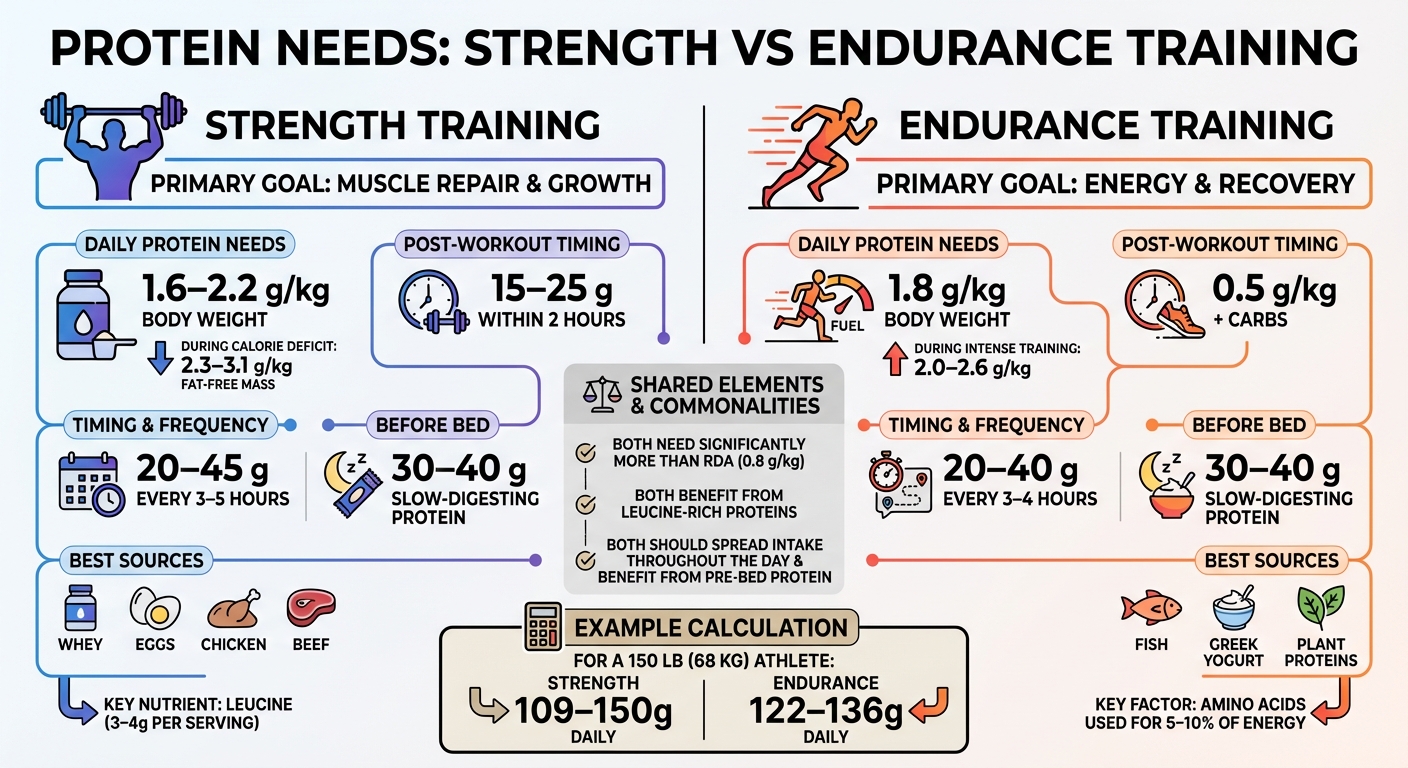
- Strength athletes need 1.6–2.2 g of protein per kilogram of body weight daily to support muscle growth and recovery. During calorie deficits, this can rise to 2.3–3.1 g/kg of fat-free mass to preserve lean muscle.
- Endurance athletes require 1.8 g/kg daily, increasing to 2.0–2.6 g/kg during intense training or low-carb phases, as protein compensates for amino acids used as energy.
- Protein timing matters for both groups. Consuming 20–40 g of protein every 3–5 hours and 30–40 g of slow-digesting protein before bed supports muscle repair and recovery.
- Post-workout protein intake is key: Strength athletes should aim for 15–25 g within two hours, while endurance athletes benefit from 0.5 g/kg paired with carbs after long sessions.
Quick Comparison
| Criteria | Strength Training | Endurance Training |
|---|---|---|
| Daily Protein Needs | 1.6–2.2 g/kg | 1.8–2.0 g/kg |
| Higher Needs (Special) | 2.3–3.1 g/kg (calorie deficit) | 2.0–2.6 g/kg (intense training) |
| Post-Workout Protein | 15–25 g | 0.5 g/kg + carbs |
| Key Protein Role | Muscle repair and growth | Energy and recovery |
| Best Sources | Whey, eggs, chicken, beef | Fish, Greek yogurt, plant proteins |
Protein Requirements Comparison: Strength vs Endurance Athletes
Protein Requirements for Strength Training
Daily Protein Intake for Strength Athletes
Strength training places unique demands on the body, particularly when it comes to muscle repair and growth. To meet these demands, strength athletes are advised to consume 1.6–2.2 g of protein per kilogram of body weight per day. This range supports both muscle hypertrophy and recovery. For instance, a 180-pound (82 kg) individual would need approximately 131–180 grams of protein daily.
Research backs this recommendation, with a meta-analysis of 49 studies identifying 1.6 g/kg/day as the point where additional protein intake no longer significantly boosts muscle mass. However, during periods of caloric restriction or weight cutting, protein needs can increase to 2.3–3.1 g/kg/day to help preserve lean muscle mass. This higher intake is crucial for maintaining strength and muscle definition when dieting.
When to Consume Protein for Strength Training
Hitting your daily protein target is essential, but timing your intake can further enhance muscle repair and growth. Experts recommend spreading protein consumption evenly throughout the day, aiming for 20–45 grams every 3–5 hours to sustain muscle protein synthesis. For example, starting your day with a protein-rich breakfast containing at least 30 grams can help initiate muscle-building processes, as noted by Sarah Wardlaw.
Post-workout protein is another key factor. Consuming 15–25 grams of protein within two hours after training can significantly aid muscle repair and growth. Pairing this protein with fast-digesting carbohydrates, like dextrose or maltodextrin, can further enhance recovery. Research also suggests that consuming protein both before and after resistance training can improve performance, recovery, and gains in lean body mass and strength.
Best Protein Sources for Strength Training
To maximize muscle protein synthesis, focus on high-quality protein sources rich in leucine, an amino acid that plays a critical role in triggering muscle growth. Around 3–4 grams of leucine per serving is ideal for this process. Animal-based proteins such as chicken, beef, fish, eggs, and dairy are excellent options, typically providing 20–25 grams of protein per serving.
Whey protein is particularly effective post-workout due to its high leucine content (over 10%) and perfect score of 1.0 on the Protein Digestibility-Corrected Amino Acid Score (PDCAAS). For those following plant-based diets, options like soy (PDCAAS 0.99) and pea protein (PDCAAS 0.89) can also support muscle building, though slightly larger servings may be needed to meet leucine requirements.
Here’s a quick breakdown of protein content in common foods:
- A single large egg: 6 grams of protein
- A 3–4 oz serving of chicken: 21–28 grams of protein
For overnight recovery, consuming 30–40 grams of slow-digesting casein protein before bed can help sustain muscle protein synthesis while you sleep.
sbb-itb-7567710
Protein Requirements for Endurance Training
Daily Protein Intake for Endurance Athletes
Current research suggests that endurance athletes need about 1.8 g of protein per kilogram of body weight per day, which is roughly 50% more than what sedentary individuals require. For example, a 150-pound (68 kg) runner would need approximately 122 grams of protein daily.
However, these numbers can fluctuate. During intense training phases, periods of reduced carbohydrate intake, or the 24-hour recovery window after a tough workout, protein needs can increase to 2.0–2.6 g/kg/day. This increase compensates for the amino acids used as fuel, which can account for around 6% of total energy expenditure. Elite endurance athletes are encouraged to aim for the higher end of the 1.8–2.0 g/kg/day range to support optimal recovery and protein synthesis. These guidelines apply equally to men and women.
When to Consume Protein for Endurance Training
Hitting your daily protein target is important, but timing your intake strategically can make a big difference in recovery. After a long run or bike ride, aim to consume 0.5 g/kg of protein (around 34 grams for a 150-pound athlete) to jumpstart muscle repair. This post-workout window is critical for shifting your body from a muscle-breaking (catabolic) state to a muscle-rebuilding (anabolic) state.
Spacing protein intake evenly throughout the day also helps. Try to consume 20–40 grams of protein every 3–4 hours to maintain steady muscle repair and recovery. If you’re squeezing in multiple training sessions with less than four hours between them, pairing protein with carbohydrates can speed up glycogen replenishment.
"Meeting the total daily intake of protein, preferably with evenly spaced protein feedings (approximately every 3 h during the day), should be viewed as a primary area of emphasis for exercising individuals."
– International Society of Sports Nutrition (ISSN)
Finally, a 30–40 gram serving of slow-digesting protein, like casein, before bed can support overnight muscle recovery and help maintain your metabolic rate.
Best Protein Sources for Endurance Training
Choosing the right protein sources is just as important as timing. For endurance athletes, high-quality animal proteins are a key part of recovery. For example:
- Fish (like salmon or tuna): 20–25 grams of protein per 3–4 oz serving, plus omega-3 fatty acids for recovery.
- Greek yogurt: 15–20 grams per cup, offering both fast- and slow-digesting proteins.
- Eggs, lean poultry, and dairy products: Provide complete amino acid profiles, including leucine, which is essential for muscle repair.
For plant-based athletes, options like soy products, nuts, seeds, and legumes can deliver solid protein. However, these sources may require slightly larger portions to meet the 3–4 grams of leucine per meal needed to maximize muscle protein synthesis. Combining different plant proteins throughout the day ensures you get all essential amino acids.
When whole foods aren’t convenient, protein supplements can help. For example, NutriFitt's EPIC Whey offers high leucine content and is quickly absorbed, making it ideal for recovery. By balancing whole food sources with quality supplements, endurance athletes can hit their daily protein targets of 1.8–2.0 g/kg and provide their bodies with the tools needed to recover and perform at their best.
Unlike strength training, which focuses on concentrated protein intake for muscle repair, endurance training prioritizes consistent, well-timed protein consumption to sustain recovery over time.
Strength vs. Endurance: Protein Needs Compared
Why Protein Needs Differ by Training Type
Strength training and endurance training place very different demands on the body, which is why their protein requirements vary. Strength training focuses on building myofibrillar proteins, which are essential for muscle growth and increasing force and power. This means strength athletes primarily need protein to build and maintain muscle tissue, which directly supports their performance goals.
Endurance athletes, however, use protein in other ways. During long workouts like cycling or running, the body taps into amino acids for energy, accounting for about 5–10% of total energy expenditure. Additionally, endurance training increases the need for mitochondrial proteins, which help produce energy, and protein is crucial for repairing muscle damage caused by prolonged activity.
Protein needs also spike during calorie restriction or low-carb training. For instance, strength athletes in a calorie deficit may require 2.3–3.1 g/kg of fat-free mass to preserve muscle. Endurance athletes following "train low" protocols - where carbohydrate intake is limited - might increase protein intake to approximately 2.0 g/kg/day to compensate for the greater breakdown of amino acids. These differences highlight the importance of tailoring protein intake to the type of training.
What Both Training Types Have in Common
Despite their differences, both training styles share some common protein principles. First, meeting total daily protein needs is non-negotiable. Both strength and endurance athletes require significantly more protein than the standard RDA of 0.8 g/kg/day.
High-quality protein sources are key. Foods rich in essential amino acids, especially leucine, are critical for muscle protein synthesis. Ideally, each serving of protein should provide 700–3,000 mg of leucine.
Another shared strategy is spreading protein intake evenly throughout the day. Consuming 20–40 grams of protein every 3–4 hours helps maintain a positive protein balance and supports recovery. Additionally, having 30–40 grams of slow-digesting protein, such as casein, before bed can enhance overnight muscle repair and metabolism.
How to Meet Your Protein Needs
To hit your protein goals, start by calculating your target based on your body weight and training type. Strength athletes should aim for 1.6–2.2 g/kg, while endurance athletes typically need around 1.8 g/kg, potentially increasing to 2.0 g/kg during intense training. For example, a 150-pound (68 kg) athlete would require about 109–150 grams of protein for strength training or 122–136 grams for endurance activities.
Break this total into 4 to 5 meals per day. If your target is 140 grams, try to consume 28–35 grams of protein per meal. Focus on high-leucine foods like eggs, Greek yogurt, lean poultry, fish, and dairy to maximize muscle protein synthesis.
When food alone isn’t enough, protein supplements can fill the gap. For post-workout recovery, fast-absorbing options like NutriFitt's EPIC Whey are a great choice. Before bed, consider casein-based supplements to provide a steady release of protein overnight. These tools can help ensure you meet both the quantity and quality of your protein needs.
Conclusion
Key Takeaways for Strength Athletes
Strength athletes should aim for 1.6–2.2 g of protein per kilogram of body weight daily, with higher needs of 2.3–3.1 g/kg of fat-free mass during calorie deficits to help maintain muscle mass. After workouts, focus on protein sources rich in leucine - like whey, eggs, or lean meats - to promote muscle protein synthesis. Remember, muscle repair isn’t limited to training days, so keeping your protein intake steady on rest days is equally important.
Key Takeaways for Endurance Athletes
Endurance athletes generally need around 1.8 g of protein per kilogram of body weight daily. During periods of intense training or when cutting carbs, increasing protein intake to 2.0 g/kg or more can be beneficial. Combining protein with carbohydrates after long training sessions helps replenish glycogen stores and supports faster recovery. If whole foods aren't enough to meet these needs, supplements can play a helpful role.
NutriFitt Supplements: A Smart Solution

Whether your goal is building strength or improving endurance, hitting your protein target is critical for performance. When it’s tough to meet your needs through food alone, NutriFitt's EPIC Whey provides a fast-digesting, leucine-rich option perfect for post-workout recovery - whether you’ve been lifting heavy weights or completing a long endurance session. For nighttime recovery, consider a slower-digesting protein to support muscle repair while you sleep.
Set your daily protein goal based on your body weight and training demands, and use supplements strategically to fill gaps where whole foods fall short. Consistently meeting your protein needs each day is what drives progress and boosts performance over time.
FAQs
How do I calculate protein needs if I do both strength and endurance training?
If you're doing both strength and endurance training, aim to consume 1.4 to 1.8 grams of protein per kilogram of body weight each day. This amount helps with recovery, muscle development, and adapting to the demands of both activities. Your exact needs may vary depending on your goals, activity level, and body weight. For tailored guidance, consider consulting a nutritionist or trainer to make sure your protein intake matches your individual requirements.
Does protein need change on rest days or only on training days?
On rest days, your body generally requires less protein compared to training days. However, keeping your protein intake steady each day plays a key role in recovery and muscle adaptation. Slightly tweaking your intake to match your activity level can help support your overall progress and performance goals.
How can I hit the leucine target on a plant-based diet?
To hit your leucine goals on a plant-based diet, prioritize foods packed with leucine, such as soy, lentils, chickpeas, beans, and quinoa. Mixing these protein sources or opting for plant-based protein blends fortified with leucine can be a smart move. By planning your meals carefully and spreading your protein intake across the day, you can support muscle recovery and protein synthesis effectively - no animal products required.
Latest Posts
How Ashwagandha Supports Testosterone Levels
10 Best Natural Pre-Workout Ingredients

Best Electrolyte Supplements for Fitness Goals

Best Nootropics for Productivity in 2026

Top 5 Sleep Hygiene Practices for Athletes

5 Best Pre-Workouts for Pump

The 30-Minute Body That Beats the 2-Hour One
Short, high-intensity 30-minute workouts can deliver equal or better cardio, strength, and fat-loss results than long sessions.
Checklist for Choosing Clean Label Certified Supplements
Checklist to verify certifications, ingredient transparency, batch COAs, GMP compliance, and bioavailable forms in clean-label supplements.